Guide 07 of 07
What actually matters at home
Two minutes, twice a day, done properly beats an expensive cabinet of products. Here is the order of importance, written plainly.
Ranked by what changes outcomes
Everything below is something we are asked about. They are not equal, and pretending they are is how people end up with an immaculate tongue scraper and untouched gaps between their molars.
Does the work
If you only ever do four things, do these four.
- Fluoride toothpaste, twice a day, spat out and not rinsed away
- Cleaning between the teeth once a day, by whatever method you will actually repeat
- Cutting how often sugar and acid appear, not how much appears at once
- Stopping smoking or vaping, which is the largest single gum-health decision most adults make
Worth doing
Real gains, smaller than the four above.
- A powered brush with a pressure sensor, if you scrub hard
- Waiting 30 minutes after anything acidic before brushing
- A night guard if you wake with a tight jaw or flattened front teeth
- A high-fluoride paste where we have prescribed one for exposed roots
Barely moves the needle
Not harmful in most cases. Just not the thing that saves the tooth.
- Mouthwash used instead of cleaning between the teeth
- Whitening toothpaste, which polishes stain rather than changing tooth colour
- Charcoal and abrasive pastes, which can wear enamel with no whitening benefit
- Switching brands after every checkup instead of changing technique
General information, not dental advice. A rinse, a paste or an interval that is right for most people may be wrong for you: medical conditions, medication and your own risk assessment change the answer.
Brushing, in six corrections
Almost nobody needs to brush more often. Most people need to brush differently. These are the six things we correct most at the hygiene visit.
- 1
Soft bristles, always
Medium and hard brushes do not clean better. They abrade enamel and push gums back, and the damage is permanent.
- 2
45 degrees to the gum line
Point the bristles into the join between tooth and gum. That margin is where plaque sits and where gum disease starts.
- 3
Small circles, light pressure
Enough pressure to blanch the gum slightly, no more. If the bristles splay within a month, you are pushing far too hard.
- 4
Two minutes, four quadrants
Thirty seconds each. Most people stop at about forty-five seconds in total and are genuinely surprised by the timer.
- 5
Do not skip the inside surfaces
The tongue side of the lower front teeth builds tartar fastest, because a salivary duct opens right there.
- 6
Spit, do not rinse
Rinsing washes away the fluoride you just paid for. Spit out the foam and leave the rest working.
We will watch you brush
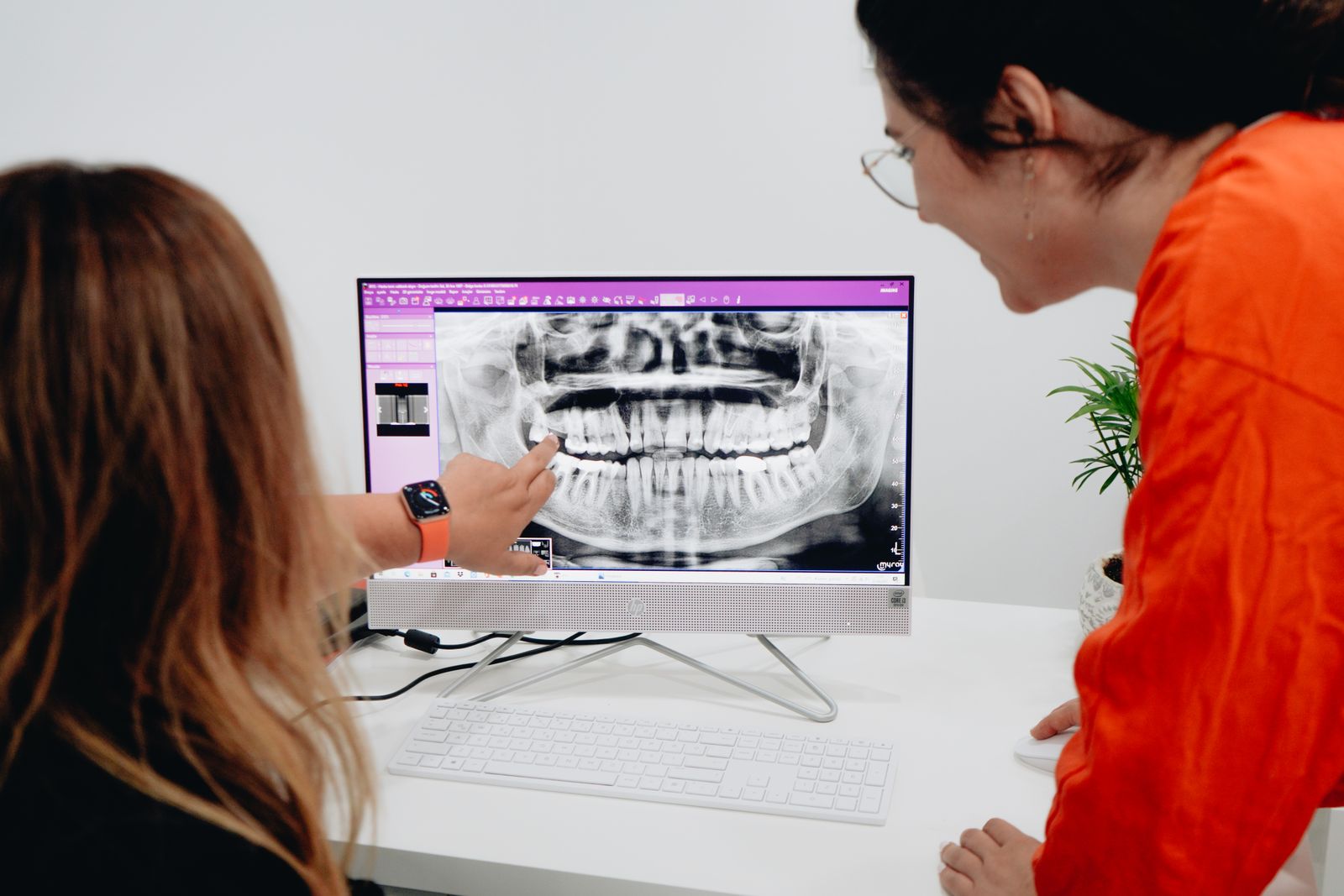
Bring your own brush to your next hygiene visit. Two minutes of watching tells us more than twenty minutes of asking, and the coaching is part of the appointment, not an extra.
Between the teeth is where it is decided
A brush reaches three of the five surfaces of a tooth. Decay between molars and gum disease both start in the two surfaces it never touches. The method matters far less than the daily repetition.
| Method | Suits | How to use it | Our take |
|---|---|---|---|
| Floss | Tight contacts, teenagers, anyone with healthy gums and no gaps | Curve it into a C around each tooth and slide under the gum margin. Straight up and down snapping does nothing. | Cheap, effective, and the one people abandon first. |
| Interdental brushes | Adults with any gum recession, bridges or wider spaces | Pick the size that fits snugly without forcing. Most mouths need two or three different sizes. | Where a space exists, these clean better than floss does. |
| Water flosser | Braces, implants, bridgework, limited dexterity | Trace the gum line slowly, pausing between each pair of teeth. Speed is where the benefit is lost. | A good addition. Not a replacement for physically disturbing plaque. |
| Wood or rubber picks | Travel, restaurants, anyone who will use them and not the alternatives | Gentle in and out at the gum margin, never forced between tight teeth. | Better than nothing by a wide margin, which is the honest test. |
Sizes, techniques and whether a method suits you are decided at an examination. Ask your hygienist to fit the interdental brushes to your mouth rather than guessing in a pharmacy aisle.
A day, end to end
The routine that fits around a real day
Four decisions, none of which take extra time. The order is the part people have never been told.
- 1
Morning
Brush before breakfast, or wait half an hour after it. Acid softens enamel, and brushing softened enamel scrubs it away.
- 2
Through the day
Water between meals. Frequency of sugar matters more than quantity: six sweet coffees is six acid attacks.
- 3
Evening
Clean between the teeth first, then brush. The debris comes out, then the fluoride goes in.
- 4
Last thing
Nothing but water after the evening brush. Saliva flow drops overnight and anything left behind sits there for eight hours.
Northstar care guides
The rest of the series
Seven guides, written by our doctors and kept free of sales talk. Each one stands on its own.
- TfGuide 01Treatment finderTell us what you notice and see which treatment usually answers it.Open
- EgGuide 02Dental emergency guideWhat to do in the first ten minutes, by symptom, and today's same-day chairs.Open
- FvGuide 03First visit, minute by minuteNinety minutes on the clock, and the three forms that come before them.Open
- CmGuide 04Comfort menuEverything an anxious patient can ask for, written down so nobody has to explain twice.Open
- IcGuide 05Insurance checkerRead your plan in five fields, then call your insurer with our script.Open
- FaGuide 06Family care by ageWhat the mouth needs at every stage, from the first tooth to a set of dentures.Open

Book a hygiene visit and we will check your technique
Gum measurements, a thorough clean and coaching on your own teeth, not on a model. Request a visit and we confirm within one business day.
4.9 from 1,186 patient reviews